
Smart Infrastructure
February 25, 2026
Smart Buildings, Smarter Infrastructure, and the Systems Shaping Our Cities

# AI
# Automation
# Automation & Digitalization
# Building Management Systems
# Commercial Buildings
# Data Centers
# Digital Manufacturing
# Digital Transformation
# Digital Twin
# Digital Twin & Simulation
# Ecosystem & Collaboration
# Energy
# Energy & Sustainability
# Energy Efficiency
# Industrial AI
# Innovation
# Smart Cities
# Smart Buildings
# Smart Construction
From Digital Twins to Grid Evolution, the Built Environment Enters Its Intelligence Era

Industry Signals
The built environment is entering a decisive moment. Buildings, infrastructure, and urban systems are now planned as adaptive, intelligent platforms instead of the static assets of the past. Leaders are focusing on energy efficiency, electrification, digital twins, and AI-enabled controls to support capital deployment, operational resilience, and sustainability.
As leaders are shifting gears, the complexity of transformation is intense, infrastructure sectors are converging, construction firms face labor shortages and supply volatility, and utilities are modernizing grids to support electrification and distributed energy. Across all of it, digitalization has become the connective tissue.
In this edition of Industry Signals, we explore:
- Insights from the Siemens Infrastructure Transition Monitor 2025 report, which positions energy efficiency and adaptive infrastructure as top priorities;
- McKinsey’s reframing of the global infrastructure as a cross-vertical ecosystem spanning physical assets, digital networks, and electrification, requiring integrated planning and capital strategies in the Infrastructure Moment report;
- Highlights from the Deloitte 2026 Engineering and Construction Outlook, including how digital twins, AI-enabled project controls, and industrialized construction are emerging as productivity levers amid workforce and cost constraints; and more.

Siemens on Elevating Energy Efficiency & Adaptive Infrastructure
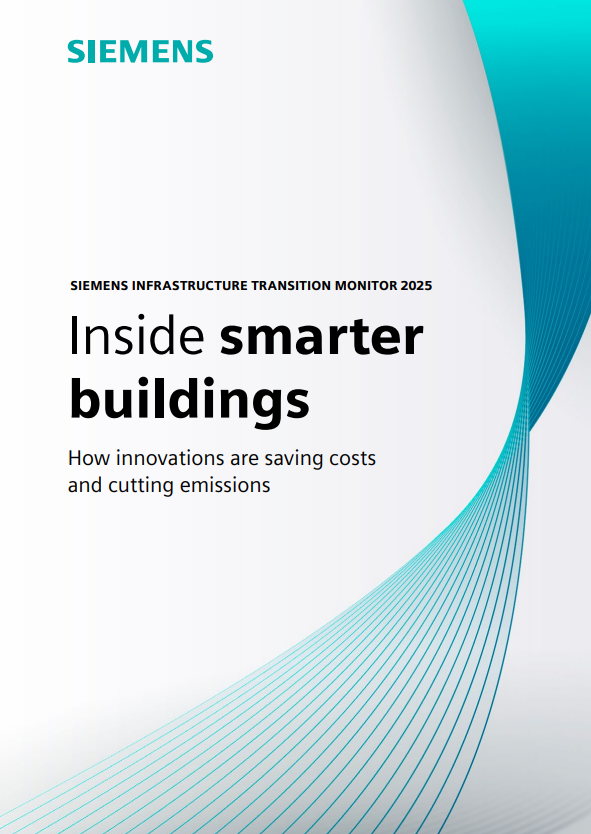
The Siemens ITM 2025 report highlights how smart, digital technologies and decarbonization strategies are reshaping the built environment, elevating energy efficiency and adaptive infrastructure as top organizational priorities. Innovations in digitalization and electrification are driving progress, but uneven deployment and financial barriers continue to slow the transition toward net zero buildings.
Key ideas:
- Organizations now rank energy efficiency in buildings as their top infrastructure priority, with more than half planning increased investment in smart building technologies and electrification over the next three years.
- Digitalization, including autonomous building systems, is widely seen as a powerful lever for reducing both costs and carbon emissions, with significant readiness reported across sectors.
- Deep renovation rates globally remain below needed levels to meet net zero targets, underscoring the importance of scalable retrofit strategies and smarter financing models to close the execution gap.
- Despite momentum, concerns about cost, access to capital, and regulatory support continue to constrain decarbonization efforts, particularly in commercial real estate.
If this report interests you, our Industry Signals post, Building Smarter: How IoT, AI and Edge Technologies Are Powering the Future of Sustainable Construction might also. In it, we explore how leading organizations are embedding real-time intelligence into the built environment to accelerate sustainability and operational performance.

McKinsey on Interconnected Systems
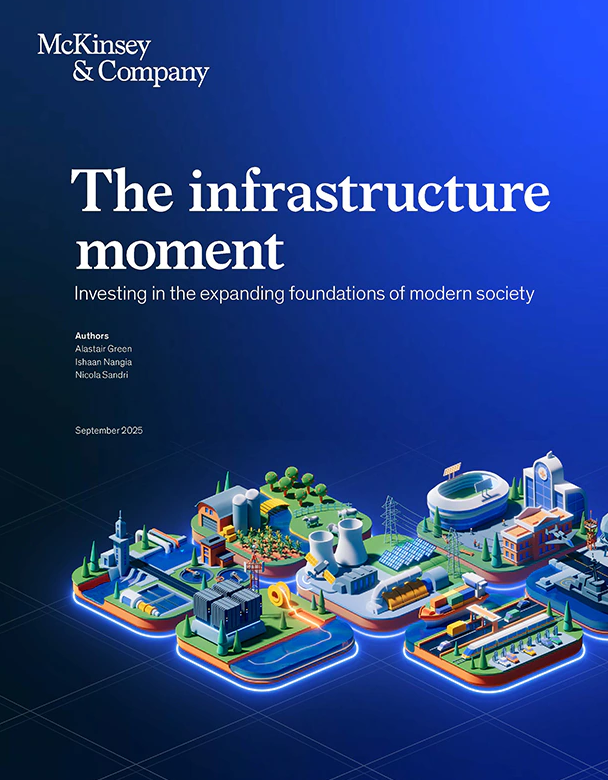
McKinsey’s Infrastructure Moment report reframes global infrastructure as an evolving, interconnected system that includes traditional physical assets, digital networks, energy transitions, and service layers, all of which demand integrated planning, financing, and execution. It calls for cross-vertical strategies that bridge technology, capital, and policy to shape resilient, future-ready infrastructure.
Key ideas:
- Infrastructure today still encompasses roads, bridges, and utilities, but now also includes fiber-optic networks, data centers, EV charging, and other tech-enabled systems that combine physical and digital layers to support economic and societal connectivity.
- McKinsey estimates a cumulative global need of roughly $106 trillion in infrastructure investment through 2040, spanning seven critical verticals including transport and logistics, energy and power, digital, social, waste and water, agriculture, and defense.
- The boundaries between infrastructure sectors are increasingly blurred (for example, EV charging corridors requiring coordination across power, transport, and digital networks), highlighting the importance of integrated strategies over siloed planning.
This report was found in the McKinsey Insights on Infrastructure series, which includes other read-worthy pieces like Humanoid Robots in the Construction Industry and Scaling Sustainable Infrastructure .

Deloitte on Digitalization, Industrialized Construction, and Project Lifecycle
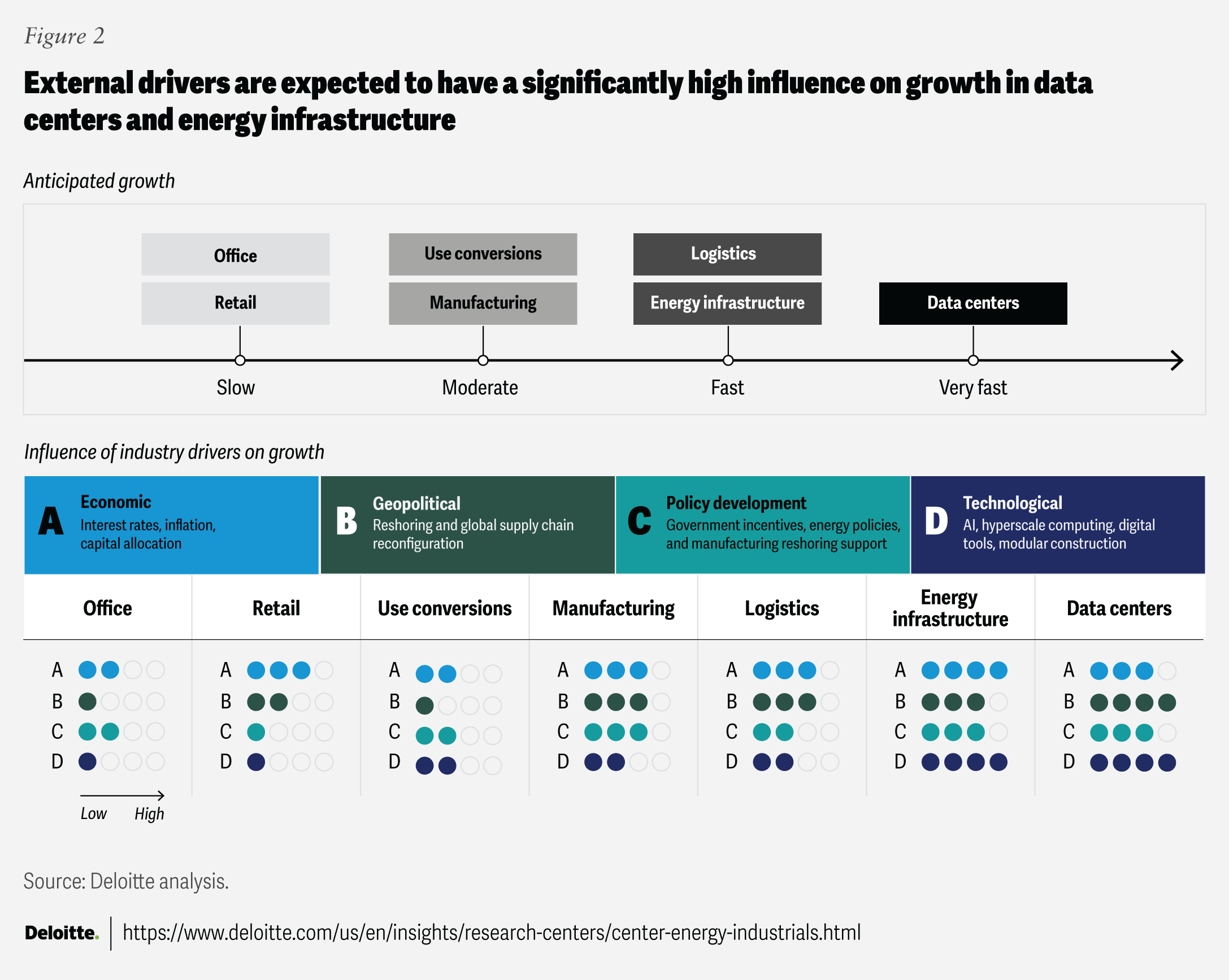
Deloitte’s 2026 Engineering and Construction Outlook highlights how the smart building industry is propelled by historic infrastructure funding, clean energy investment, and digital transformation, yet constrained by persistent labor shortages, cost volatility, and project complexity. The future centers on productivity gains through digitalization, industrialized construction methods, and stronger integration across the project lifecycle.
Key ideas:
- Public infrastructure programs, energy transition projects, and advanced manufacturing facilities are driving strong backlogs, but delivery capacity remains under pressure from workforce gaps and supply chain fragility.
- Firms are accelerating adoption of digital twins, AI-enabled project controls, advanced analytics, and connected job sites to reduce cost overruns and improve schedule certainty.
- Prefabrication and off-site manufacturing are emerging as strategic responses to labor scarcity and margin pressure, shifting construction toward more manufacturing-like processes.
- Beyond hiring, companies are investing in upskilling, automation, and technology-enabled workflows to close the productivity gap and attract next-generation talent.
For leaders evaluating how infrastructure, construction, and energy strategies converge, Deloitte also released a 2026 Power and Utilities Industry Outlook , which offers a forward-looking view of the regulatory, investment, and technology shifts shaping the next phase of grid evolution.

Other Reading

As the conversation around smart construction expands to encompass mobility, energy, and civic systems, Smart Cities , a peer-reviewed open-access journal, provides a valuable forum for examining the technical, environmental, and socio-economic dimensions of urban digital transformation. We especially enjoyed the Construction of Basic Models and Formal Verification of Building Digital Twins That Supports Multiple Interactive Objects article.

The Association of Smart Homes and Buildings, of which Siemens is a member, recently released their 2025 Smart Building Trends & Technology Adoption research piece, which includes findings from 308 commercial building owners, operators, IT leaders and facility operators, across six areas including cloud building management systems, smart building software, sustainability/energy management, digital twins, AI, and smart building monetization models.

Looking Ahead
The future of cities relies on the connection of technologies: smart buildings are connected to smart grids, construction is connected with digital integration, and infrastructure investment is needed across all sectors.
Leaders in manufacturing, infrastructure, and energy are thinking beyond assets towards platforms and ecosystems and architecting intelligence across the built environment, aligning capital, digital capability, and operational execution into a cohesive strategy.

That’s a wrap for this edition of Industry Signals. Have a report, use case, or event you'd like to see featured in an upcoming issue? Send a note via PM. We’re always looking to spotlight what’s shaping the future of industry and find recommendations from the Xcelerator Community especially valuable. Your insights and experiences continually shape Industry Signals.
Comments (0)
Popular

Dive in
Related
Blog
Unlocking the Future of Manufacturing: Faster, More Economical, and Smarter Through IT/OT Integration
By Rogerio Boleta • May 21st, 2025 • Views 182
Blog
Building Smarter: How IoT, AI, and Edge Technologies Are Powering the Future of Sustainable Construction
By Industry Signals • Jul 29th, 2025 • Views 445
Blog
Industry Signals – August 5, 2025: Smart Manufacturing at the Crossroads of Technology, Resilience, and Human-Centric Innovation
By Industry Signals • Aug 5th, 2025 • Views 277
Blog
Unlocking the Future of Manufacturing: Faster, More Economical, and Smarter Through IT/OT Integration
By Rogerio Boleta • May 21st, 2025 • Views 182
Blog
Building Smarter: How IoT, AI, and Edge Technologies Are Powering the Future of Sustainable Construction
By Industry Signals • Jul 29th, 2025 • Views 445
Blog
Industry Signals – August 5, 2025: Smart Manufacturing at the Crossroads of Technology, Resilience, and Human-Centric Innovation
By Industry Signals • Aug 5th, 2025 • Views 277